There's a moment most families recognise, even if they don't name it immediately. Your parent starts holding the wall when they walk to the bathroom. They stop going to the balcony in the mornings. They say things like "my knee has been acting up" but wave it off when you ask more.
It's easy to assume this is just ageing. It often isn't.
Many of the physical changes we associate with growing old — stiffness, weakness, balance problems, pain — are treatable conditions. A qualified physiotherapist visiting your home can make a real and lasting difference. The question is knowing when to call one.
Here are five signs that it's time.
1. They've Had a Fall — or They're Afraid of Falling
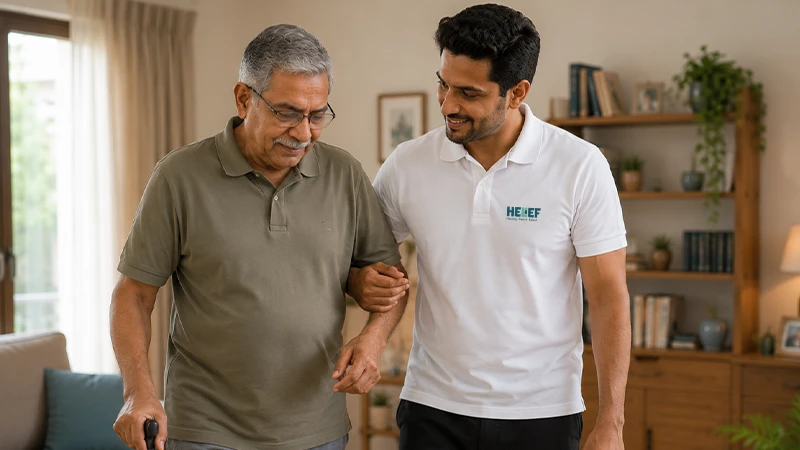
Falls are the most serious physical risk facing adults over 65. A single fall can cause a hip fracture that leads to surgery, hospitalisation, and months of recovery. But the fear of falling is almost as damaging as a fall itself.
When someone becomes afraid of falling, they start moving less. They avoid stairs. They shuffle instead of walking properly. And that reduced movement weakens the very muscles that prevent falls — creating a cycle that's hard to break without professional help.
A geriatric physiotherapist assesses three things: balance, gait, and lower-limb strength. They then design a specific programme to address whatever is weakest. They'll also walk through your home and point out hazards you might not have noticed — a loose rug, a bed that's too low, a bathroom without grab rails.
Watch for: Holding onto walls or furniture while walking, shuffling steps, avoiding stairs, reluctance to go out alone, or expressing worry about falling.
2. They're Recovering from a Fracture or Surgery
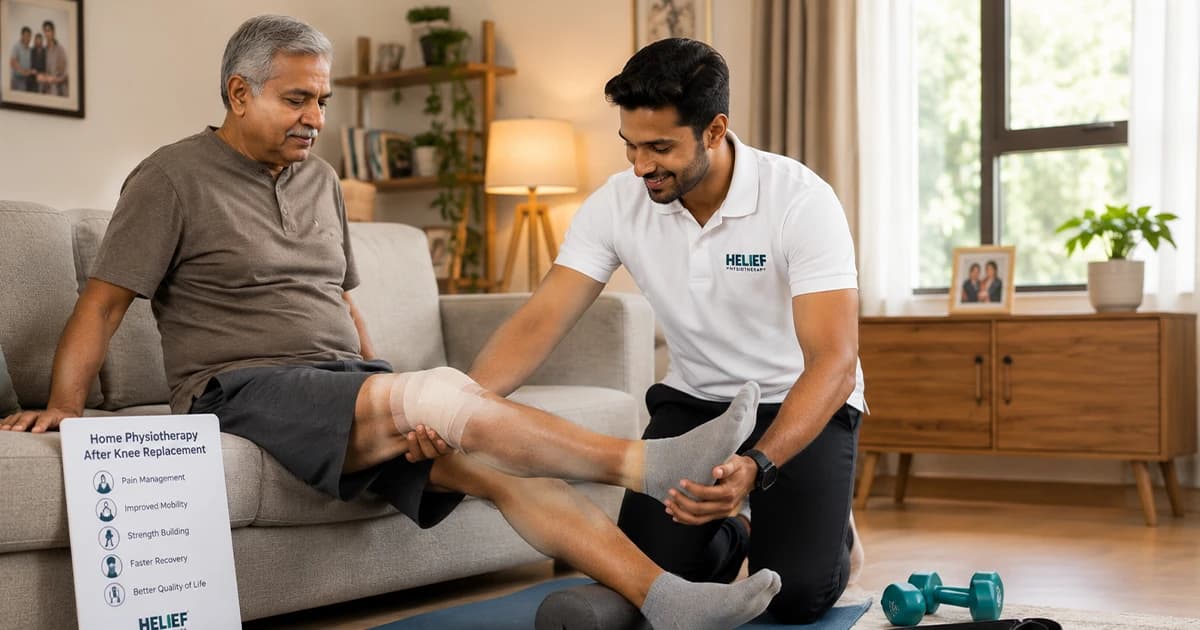
After a hip replacement, knee surgery, or a fracture — especially a hip fracture — physiotherapy isn't optional. It's what determines whether your parent gets their mobility back or not.
Without guided rehabilitation, muscles weaken rapidly, scar tissue becomes rigid, and joints stiffen in ways that are very difficult to reverse later. The first two to four weeks after discharge are the most critical — and also the weeks when most patients are too weak or in too much pain to travel to a clinic.
Post-surgery home physiotherapy solves this problem directly. The physiotherapist comes to you from day two or three after discharge, when the real work of recovery needs to begin. Sessions start gently — getting in and out of bed safely, walking with a frame — and progress steadily each week.
Read our detailed guide on recovering from knee replacement surgery if this applies to your parent.
Watch for: Discharge paperwork that recommends physiotherapy, reluctance to move the operated limb, pain during normal activity, or a patient who is simply sitting in the same chair all day because moving hurts.
3. Chronic Pain Is Getting in the Way of Daily Life
There's a difference between an occasional ache and pain that stops your parent from standing up from a chair, walking to the kitchen, or sleeping through the night. The second kind is not something to simply accept.
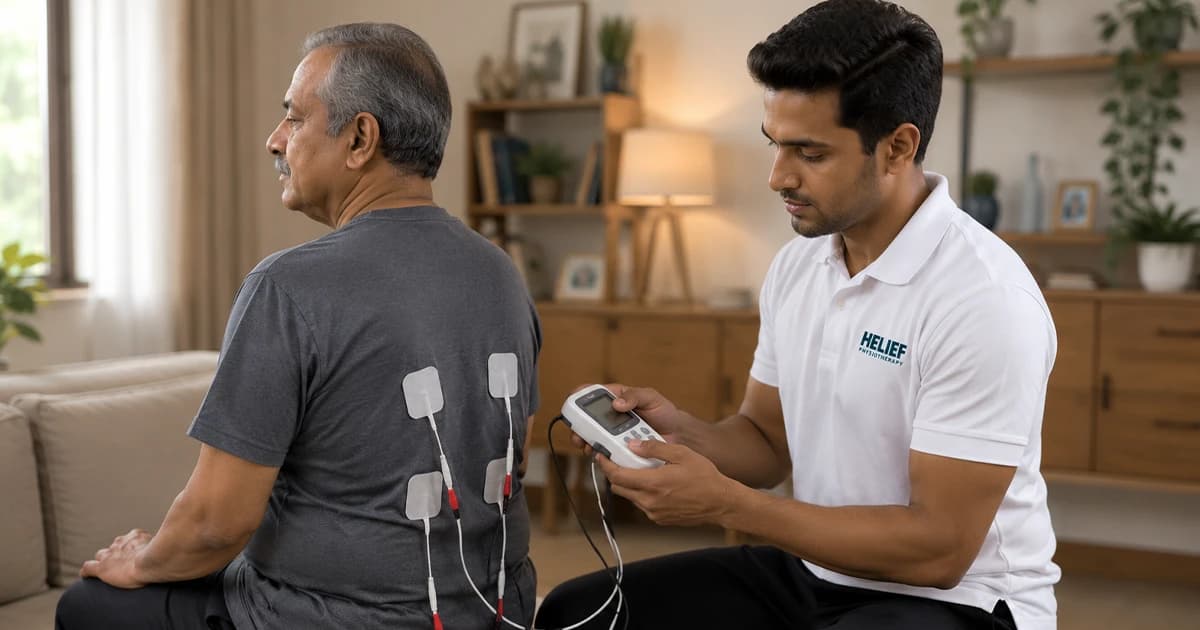
Persistent back pain, knee pain, and hip pain in older adults almost always has a treatable cause — usually a combination of muscle weakness, joint stiffness, and movement patterns that place extra load on the wrong structures. Painkillers can take the edge off, but they don't fix the underlying problem.
Orthopedic physiotherapy at home addresses the root cause. Your physiotherapist can see how your parent moves in their actual environment — not in a clinic with ideal flooring and perfect lighting — and tailor the treatment to what they actually need to do each day.
Watch for: Wincing when standing up or sitting down, avoiding walking outside, regularly reaching for pain medication, poor sleep due to pain, or a loss of appetite that seems connected to discomfort.
4. They've Had a Stroke or a Neurological Event
After a stroke, the brain can rewire itself to compensate for damaged areas — but only if it receives the right stimulus. That stimulus is movement. Consistent, guided, repetitive movement.
The research is clear on this: early and intensive stroke rehabilitation leads to significantly better outcomes than delayed or inconsistent treatment. The first three to six months after a stroke are the most important window for recovery, and home physiotherapy is often the most practical way to deliver consistent sessions during this period.
A neurological physiotherapist works on re-learning movement patterns — standing, walking, reaching — as well as balance, spasticity management, and rebuilding strength on the affected side.
Watch for: Weakness on one side of the body, changes in speech or swallowing, difficulty with fine motor tasks (buttoning a shirt, holding a cup), tilting to one side when sitting, or dragging a foot when walking.
5. They're Just… Moving Less — Without an Obvious Reason
Sometimes there's no single event. Your parent just seems to be doing less. They used to walk to the shop, now they don't leave the bedroom. They used to sit in the garden, now they don't manage the three steps down to it. They get tired faster than they used to.
This gradual withdrawal from physical activity is called deconditioning. It's a downward spiral: inactivity leads to muscle loss, muscle loss makes movement harder, and harder movement means more inactivity. Left unchecked, it significantly accelerates physical and cognitive decline.
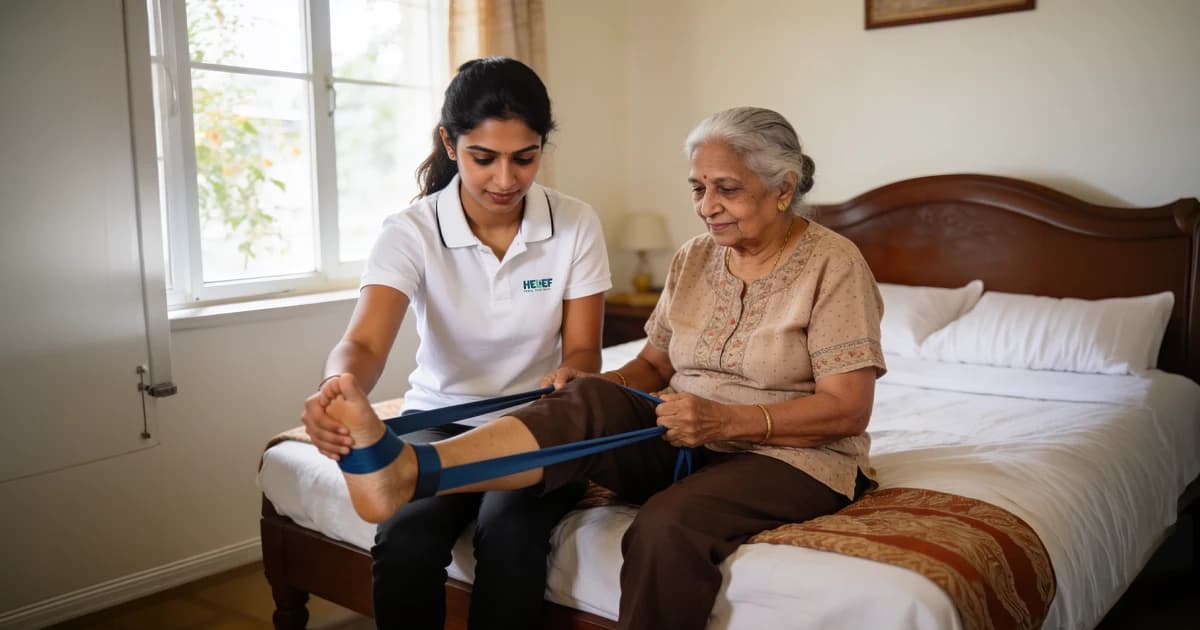
A geriatric physiotherapy assessment can identify what's driving the withdrawal — pain, weakness, breathlessness, low confidence — and design a programme to rebuild function gradually and safely, starting from wherever your parent is right now.
Watch for: Spending most of the day in one chair or in bed, fatigue after minimal activity, stopping hobbies or social activities that involve movement, or unintended weight loss.
When to Act
If you've recognised one or more of these signs, the right time to call is now — not after the next fall, not when the pain becomes unbearable.
We cover home physiotherapy across Bangalore — including Indiranagar, Koramangala, JP Nagar, Jayanagar, and surrounding areas. The first step is a free home assessment, where a certified physiotherapist visits, evaluates your parent's condition, and tells you honestly what treatment looks like and how long it takes.
No obligation. Just clarity.