Knee replacement surgery replaces a worn-out joint with a metal and plastic implant. It's one of the most successful orthopaedic procedures in the world — but the surgery itself is only half the story.
The other half is rehabilitation. And how seriously you approach it in the weeks after discharge will have more influence on your final outcome than the quality of the implant or the surgeon's technique.
We've seen patients with excellent surgical results who never fully regained normal walking because they skipped physiotherapy or stopped too early. We've also seen patients who were told their surgery was "routine" but worked through a careful home rehabilitation programme and were climbing stairs without a rail within three months.
The difference is almost always the rehab.
Before Surgery: Start Earlier Than You Think
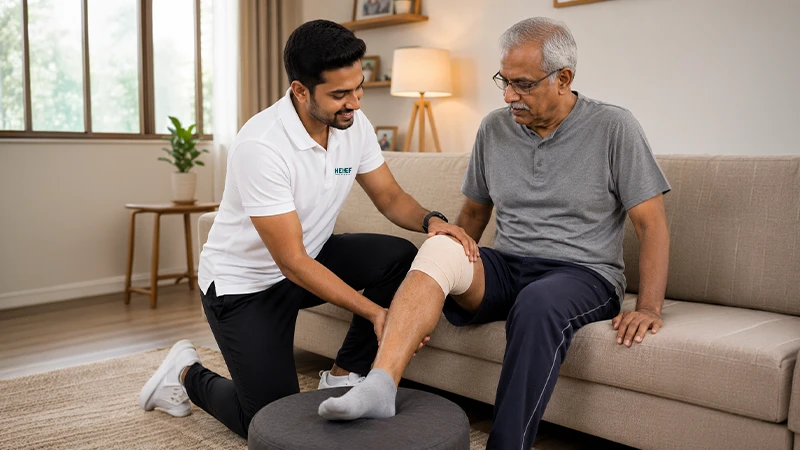
If your surgery date is already booked, the best thing you can do right now is start physiotherapy before the operation.
This is called prehabilitation, and the evidence behind it is strong. A 2014 study published in Physical Therapy found that patients who completed pre-surgical strengthening exercises spent significantly less time in inpatient rehabilitation after knee replacement compared to those who didn't. They also regained functional independence faster.
Pre-surgical physiotherapy for knee replacement focuses on:
- Strengthening the quadriceps before the surgery causes temporary muscle loss
- Practising the exercises you'll need to do immediately after the operation
- Learning how to safely transfer from lying to sitting, sit to standing, and manage steps with a frame
Even two to three weeks of prehabilitation makes a measurable difference. If you're having surgery soon, call us and we'll get started immediately.
Week 1–2: The Most Important Two Weeks
The days immediately after surgery are uncomfortable. Your knee will be swollen, warm, and painful, and the temptation is to keep it as still as possible. This instinct — while understandable — is actually the one thing that most delays recovery.
The goal in the first two weeks isn't strength. It's preventing the joint from stiffening and keeping blood moving to reduce the risk of clots. Both of these require movement, even if that movement is small and uncomfortable.
A physiotherapist visiting your home in this phase will work with you on:
Gentle range-of-motion exercises in bed — Ankle pumps, heel slides, and quad sets done lying down. These take five to ten minutes and should be done several times a day. Your physio will demonstrate them clearly and make sure you're doing them correctly.
Sitting out of bed — Getting the knee to bend to 90 degrees (a right angle) is one of the key milestones of the first week. Your physiotherapist will help you achieve this gradually and safely.
Standing and early walking — With a frame initially, building weight-bearing tolerance day by day. The goal by the end of week two is to manage short distances at home safely.
Swelling management — Your physio will teach you how to position your leg correctly, when to apply ice, and what to watch for that warrants a call to your surgeon.
By the end of week two, most patients can: walk short distances with a walker, get in and out of a chair with assistance, bend the knee to approximately 70–90 degrees, and manage basic personal care.
Week 3–6: Where Real Progress Happens
By week three, something shifts. The acute post-surgical pain starts to ease, swelling reduces, and movement becomes noticeably easier. This is when patients often feel like they can manage on their own — and it's also when the most important rehabilitation work begins.
The physiotherapy programme in this phase moves from pain management to active rebuilding.
Range of motion becomes the primary focus. Getting the knee to bend past 100 degrees is necessary for climbing stairs normally. Getting to 110–120 degrees is the goal for most activities of daily living. Your physio will use hands-on techniques and progressive exercises to get you there.
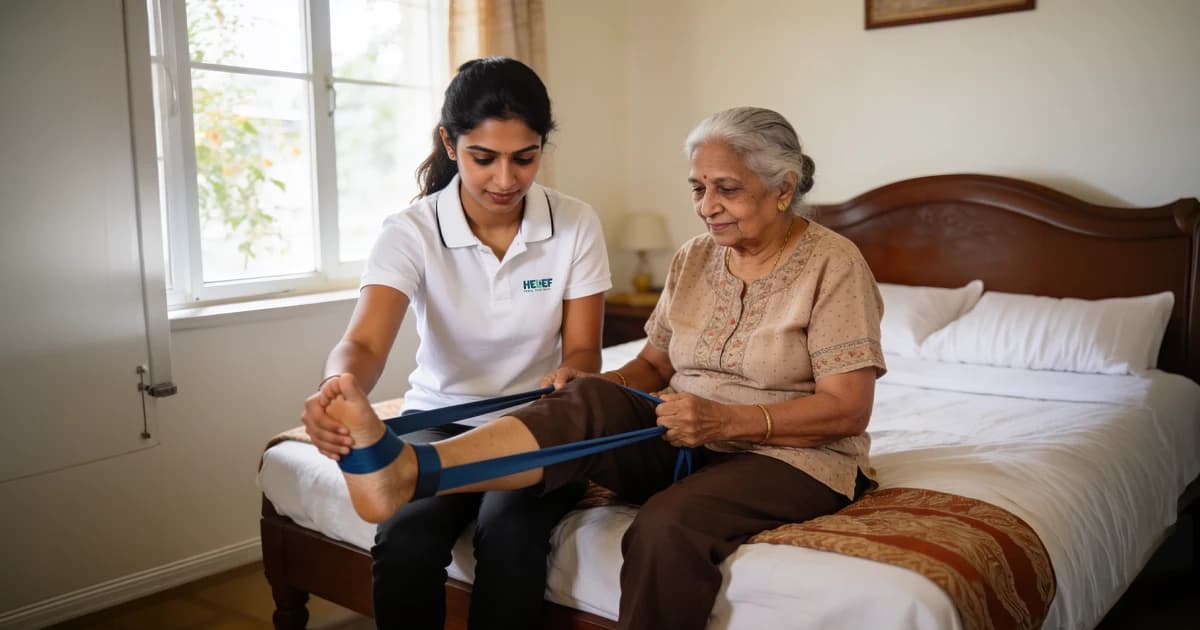
Muscle strength starts coming back. Step-ups, mini squats, and leg exercises with resistance bands rebuild the quadriceps and hamstrings that support the new joint.
Gait retraining is often underestimated at this stage. Most patients develop a slight limp during the painful early weeks, and without correction, this pattern can persist long after the pain has gone. Your physiotherapist watches how you walk and makes specific corrections to restore a normal, symmetric gait.
Stair practice — first with two rails, then one, then independently. This is a milestone most patients and families care deeply about, and it's achievable for most people by weeks five to six.
By the end of week six: walking without a frame indoors, climbing stairs one step at a time, bending the knee to 100–110 degrees, managing most daily tasks at home independently.
Week 7–12: Don't Stop Here
This is where patients most commonly make a mistake. The knee feels dramatically better. Walking is manageable. Life is starting to look normal again. So physiotherapy gets scaled back or stopped entirely.
Inside the joint, however, healing is still actively happening. The muscles are stronger but not yet where they need to be for long-term joint health. Balance and proprioception — the joint's sense of its own position — are still impaired. Stopping rehabilitation at this stage increases the risk of falls, re-injury, and a long-term outcome that's worse than it should be.
The programme in weeks 7 to 12 shifts to building the strength and stability that will protect the new joint for years.
This includes progressive resistance exercises, balance and proprioception training, endurance work (longer walks, gentle inclines), and eventually return-to-activity planning — tailored to your specific lifestyle, whether that's cooking for a family, managing a garden, or travelling.
By the end of week twelve, most patients are: walking normally without a limp or walking aid, managing stairs with a normal alternating gait, sitting and rising from a standard chair without using armrests, and returning to most social and daily activities.
Why Home Physiotherapy Makes a Difference Here
Clinic-based rehabilitation after knee replacement has one fundamental problem: getting there.
In weeks one through four, travelling to a clinic is painful, logistically complicated, and sometimes genuinely impossible. Patients skip sessions. Sessions get delayed. And the early weeks — the ones that matter most — pass without consistent rehabilitation.
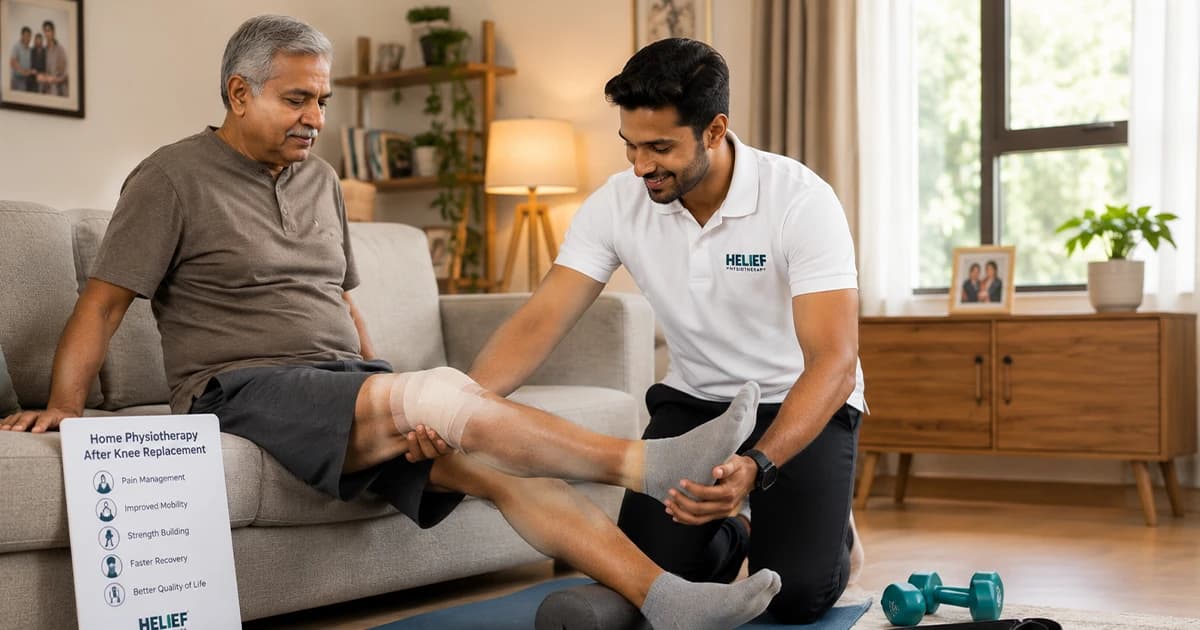
Home-based post-surgical physiotherapy removes this barrier entirely. Your physio comes to you, three times a week in the early phase and reducing as you gain independence. They work in your actual environment — your stairs, your bathroom, your bedroom — and give your family caregivers clear guidance on how to help safely between sessions.
If your parent is recovering from knee surgery, also see our guide on signs an elderly patient needs home physiotherapy — recovery is often a family effort, and knowing what to look for matters.
We provide post-surgery home physiotherapy across Bangalore, starting from the day of discharge from hospital.
Frequently Asked Questions
When should physiotherapy start after knee replacement? Ideally the day after surgery in hospital, and continuing at home from days two or three after discharge. The earlier you start, the better.
How many sessions will I need? Typically 20 to 24 sessions over 10 to 12 weeks — more frequent early on, tapering as you gain strength and independence.
Is it painful? The early sessions involve discomfort, especially when the knee is being moved through its range. A good physiotherapist works within your tolerance and manages this carefully. The discomfort reduces significantly after the first two weeks.
What if I've already had the surgery and haven't started physiotherapy yet? Start now. Late rehabilitation is always better than none. The programme will be adapted to where you are in recovery.